
How the AI transforms project management (and what leaders need to know)
Project management is in the midst of a revolution
Companies face more complex projects, shorter deadlines and more dispersed teams. Outcome:
- 70% of projects exceed deadlines
- 55% above budget
- 42% fail to meet initial targets
But in 2026, a new variable changed the situation: artificial intelligence. The AIA does not replace project managers. She did. strengthen, the accelerateand the helps to make better decisions.
1. What AI can and cannot do in project management
Before going further, let's clarify a key point.
What the AI can do:
- risk analysis
- predict delays
- estimate workloads
- automate tracking
- generate reports
- prioritise tasks
- identify critical dependencies
What the AI cannot do:
- replace leadership
- managing human relations
- making complex strategic decisions
- replace the intuition of an experienced manager
In summary, remember this: AI is a co-pilotNot a pilot. Besides, isn't there an AI called Copilot?
2. The 7 most powerful uses of AI in project management
Here's how successful companies use AI today and how to inspire you.
2.1. Predict delays before they happen
AIA analyses and evaluates:
- Dependencies
- Project history
- workload
- Risks
- team behaviour
She can say, "The project is 78% likely to be late if you don't reallocate resources." It's a huge advantage to adjust before it's too late.
2.2. Automation of follow-ups and reminders
One of the main assets of AI is its ability to automate. L的IA can help you:
- send automatic reminders
- update the statutes
- Reinvigorating those responsible
- Synchronize deadlines
So less micro-management and more fluidity.
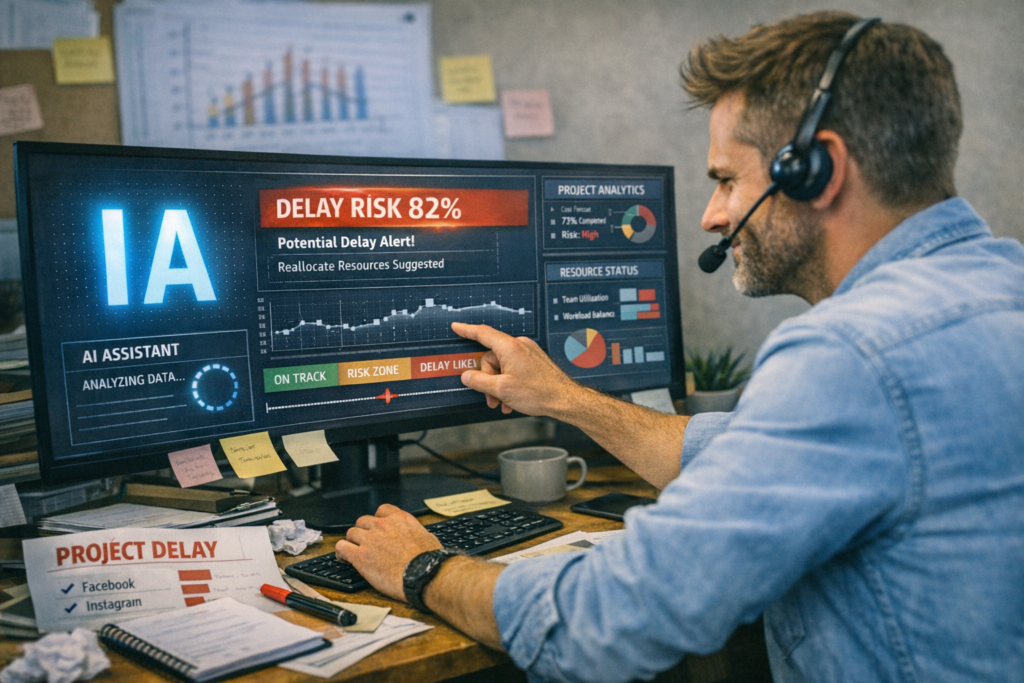
2.3. Generate reports instantly
No more tedious hours to prepare and write reports.
IA can be an excellent co-pilot and help you generate:
- progress reports
- risk analysis
- summaries of meetings
- Dashboards
In a few minutes. Of course, it will be the manager's responsibility with his expertise and experience to ensure the accuracy of the report data and its consistency.
2.4. Optimize resource allocation
IA may:
- analyse skills
- detect overloads
- proposing redeployments
- balance teams
Result: fewer burnouts, more efficiency and time savings on low value-added activities for the company and team.
2.5. Identifying invisible risks
IAA will help you detect:
- critical tasks
- dangerous addictions
- potential delays
- bottlenecks
It will be useful to make sure you see what the human would not see.
2.6. Improving planning
IAA will help you better:
- estimate durations
- propose scenarios
- simulate alternative plans
- optimize calendars
This will make planning more realistic, faster and more reliable for the manager.
2.7. Facilitate team communication
IAA will help you better:
- summarize the discussions
- extract decisions
- clarify responsibilities
- generate records
It's a huge saving of time.
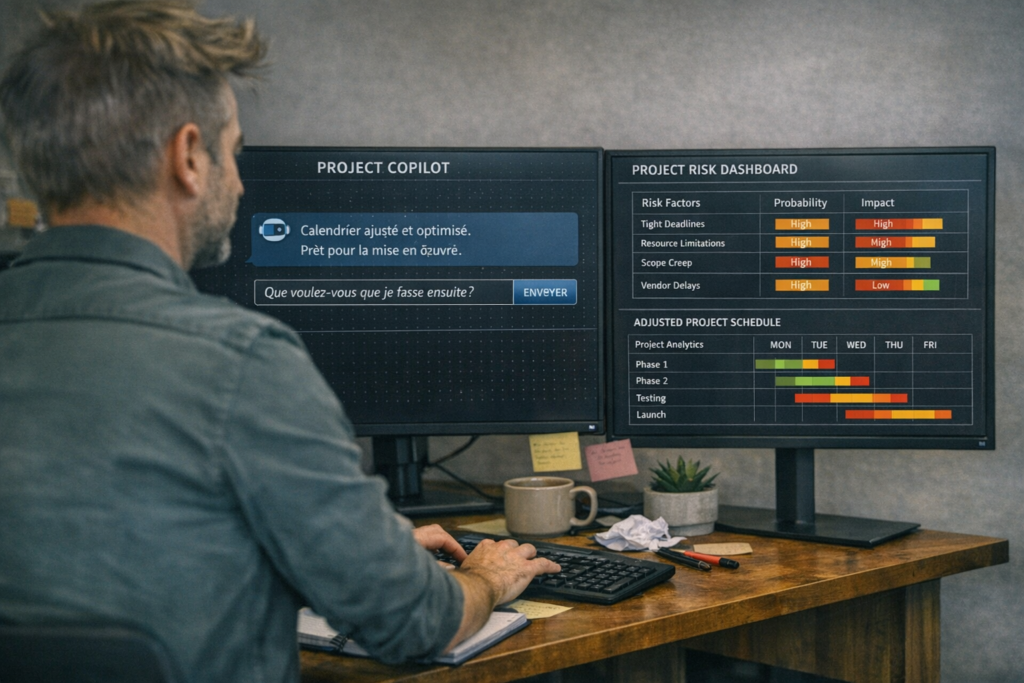
3. Errors to avoid when integrating AI into project management
Error 1: believe that the AI will do everything. The AI helps, but does not replace governance.
Error 2: Choose too many tools. A good system = 1 or 2 well integrated tools.
Error 3: not forming the team. The AI is effective only if the team uses it.
Error 4: ignore strategy. The AI must serve the strategy, not the other way around.
4. Concrete example: how an SME reduced its deadlines by 30% thanks to the AI
A service company had:
- projects in arrears
- an overflowing team
- no clear follow-up
- meetings
In 45 days, she managed to:
- integrate an AI tool
- automate tracking
- create a dashboard
- analyse the different risks according to their importance
- Relieving and optimizing resources on specific tasks
Outcome:
30.00 times
+22% productivity
+18% customer satisfaction
IA is a strategic advantage for project managers
Companies that adopt AI:
- save time
- reduce risk
- improve communication
- increase productivity
- deliver faster and better
IA is not a fashion. It has become a strategic lever not to be overlooked.
Do you want to integrate AI into your project management ?